Fever in children

Fever is one of the most common symptoms in children and is usually a sign of an infection that the body is actively fighting. Especially in the evening, at night and at weekends, parents face the question of whether their child can be cared for at home or needs medical attention. In a video consultation you receive an initial medical assessment with clear recommendations on how to proceed.

12 doctors available now

Overview

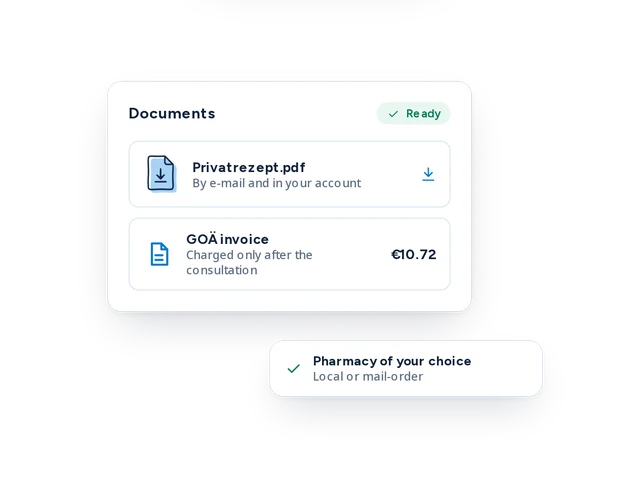
Fever is one of the most common reasons why parents seek medical advice. In children, fever is generally defined as a body temperature of 38.5 °C or higher, and in infants under three months already from 38.0 °C. Fever is not an illness in itself but a useful defence reaction: the body raises its temperature to fight pathogens more effectively. Especially in the evening, at night and at weekends, parents face the question of whether a doctor's visit is necessary. This is exactly where the video consultation comes in: a doctor asks specifically about warning signs, assesses your child's general condition and discusses the next steps with you – from care at home to a visit to a practice or immediate emergency care. Following medical assessment, a private prescription can be issued if needed. Billing follows the German medical fee schedule (GOÄ) for privately insured patients and self-payers.
Common causes

In most cases, fever in children is caused by viral infections such as colds, flu-like illnesses or gastrointestinal infections. Roseola (three-day fever), a typical viral illness of early childhood, also begins with a high fever lasting several days. Middle ear infections, tonsillitis and urinary tract infections are further possible causes – the latter particularly when no respiratory infection is apparent. After vaccinations, a temporary rise in temperature can occur; it is usually harmless and subsides within one to two days. Less commonly, bacterial illnesses such as pneumonia or – very rarely, but seriously – meningitis are behind the fever. The height of the fever says little about the severity of the illness. What matters is the child's general condition: is the child drinking enough, can it be soothed, and does it respond when spoken to?

When to see a doctor

For infants under three months, the rule is: any fever of 38.0 °C or higher should be evaluated by a doctor without delay. For older children, seek medical advice if the fever lasts longer than three days, repeatedly rises above 40 °C, the child is hardly drinking, has noticeably fewer wet nappies, or seems unusually drowsy and listless. Persistent vomiting, severe ear or abdominal pain and fever without an apparent cause are also reasons for a medical assessment – outside practice hours this can often be done well by video first. If emergency signs occur, call the emergency number 112 immediately: these include difficulty breathing or fast, laboured breathing, pinpoint skin haemorrhages that do not fade under pressure, neck stiffness, a first febrile seizure or one lasting longer than a few minutes, grey or bluish skin colour, and a child who can barely be roused.

Symptoms & Indications

Elevated body temperature from 38.5 °C (in infants under three months already from 38.0 °C) Flushed, hot face and glassy eyes Tiredness, fussiness or tearfulness Loss of appetite and reduced drinking Chills or shivering Sweating, especially as the fever subsides Headache and aching limbs

Treatment Options

  • Adequate fluid intake (water, unsweetened tea, breast milk)
  • Physical rest and taking it easy
  • Light clothing and a suitable room temperature
  • Calf compresses for older children with warm legs
  • Fever-reducing agents (antipyretics) following medical assessment
  • Regular monitoring of temperature and general condition

Important Notes

  • In infants under three months, fever is always a reason for prompt in-person medical evaluation – a video consultation cannot replace a physical examination in this case.
  • If warning signs occur, such as difficulty breathing, a rash that does not fade under pressure, neck stiffness, persistent listlessness or a febrile seizure, call the emergency number 112 immediately.
  • The video consultation provides an initial medical assessment and advice; it cannot replace a physical examination, an ear examination or a urine test.
  • Whether a medication or a private prescription is appropriate is decided individually by the doctor – a prescription cannot be guaranteed.
HOW IT WORKS

How OpenClinic24 works

STEP 01

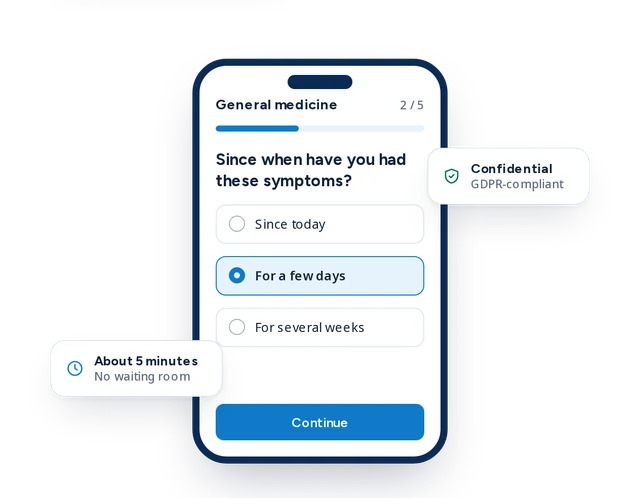
Complete the questionnaire

Brief details about your symptoms

STEP 02

Doctor connects with you

Video consultation within minutes

STEP 03

Receive your documents

Prescription, sick note or referral, digitally

Estimated wait

~ min wait

Related treatments

More conditions we treat by video consultation.

AVAILABLE NOW

Video consultation — usually <15 min wait

Medical notice: Not a substitute for an in-person medical examination. The information on this page is intended for general guidance only. In an emergency, please call 112.

Frequently Asked Questions

At what temperature does my child have a fever?

In children, fever is generally defined as a body temperature of 38.5 °C or higher, and in infants under three months already from 38.0 °C. Values between 37.6 °C and 38.4 °C are considered an elevated temperature. In small children, rectal measurement is the most reliable; ear and forehead thermometers may give differing readings.

Can a video consultation help when my child has a fever?

Yes, particularly outside regular practice hours. The doctor asks specifically about warning signs, assesses your child's general condition on video and discusses with you whether care at home is sufficient or whether a visit to a practice or hospital is necessary. Following medical assessment, a private prescription can be issued if needed. If emergency signs are present, you will be referred directly to the emergency number 112 or an emergency department.

What does the video consultation cost and will my insurance cover it?

Billing is a private medical service under the German medical fee schedule (GOÄ). For privately insured children, you receive an invoice to submit to your private health insurer or the Beihilfe (civil-service allowance), which usually reimburses the costs. Self-payers see the price transparently before booking; there are no hidden costs.

Does a fever always need to be lowered?

No. Fever is a useful defence reaction of the body and does not need to be lowered simply because of the temperature reading. What matters is how the child feels: if the child is clearly suffering, drinking poorly or barely sleeping, the use of fever-reducing agents may be advisable following medical assessment. The choice and use should be discussed with a doctor.

What is a febrile seizure and what should I do?

A febrile seizure is a convulsion occurring during a feverish infection, mainly affecting children between six months and five years, and it usually stops by itself after a few minutes. Place your child safely on the floor or a soft surface, do not restrain them and do not put anything in their mouth. For a first febrile seizure, a seizure lasting longer than a few minutes, or if your child does not recover quickly afterwards, call the emergency number 112.