


Dizziness and vertigo

Dizziness is a common symptom with many possible causes – from benign positional vertigo to circulatory problems or neurological conditions. In a video consultation, a structured medical history helps distinguish harmless forms from warning signs. Following a doctor's assessment, treatment recommendations and, where medically appropriate, a private prescription can be issued.

12 doctors available now

Overview

Dizziness is one of the most common complaints in medical practice and can have very different causes. Many people describe a spinning sensation as if on a carousel, a swaying feeling as if on a boat, or unspecific light-headedness. In most cases the cause is benign – particularly often benign paroxysmal positional vertigo, in which brief attacks of spinning dizziness are triggered by changes in head position. In an OpenClinic24 video consultation, a doctor takes a structured medical history: the type of dizziness, its triggers, the duration of the attacks, accompanying symptoms such as hearing problems or tinnitus, and possible warning signs. On this basis it is often possible to assess whether a benign condition is likely or whether a prompt in-person visit to a practice or hospital is needed. Following the doctor's assessment, treatment recommendations can be given, repositioning exercises demonstrated or – where medically appropriate – a private prescription issued in accordance with the German medical fee schedule (GOÄ).
Common causes

The most common cause of brief attacks of spinning dizziness triggered by head movements is benign positional vertigo: small calcium crystals move into the semicircular canals of the inner ear and irritate the balance organ. Longer-lasting spinning dizziness with nausea can indicate inflammation of the vestibular nerve (vestibular neuritis). Attack-like dizziness with ear pressure, tinnitus and hearing loss is typical of Menière's disease. Migraine can also cause episodes of dizziness (vestibular migraine). In addition, circulatory causes may be involved, such as blood pressure fluctuations when standing up, fluid deficiency or side effects of medication. Swaying dizziness and light-headedness also occur with neck muscle tension, anxiety disorders or, in older age, through the interplay of several factors. Less commonly, serious neurological causes such as impaired blood flow to the brain are responsible – their warning signs are checked systematically during the video consultation.

When to see a doctor

Seek medical advice if dizziness occurs for the first time, keeps returning, lasts longer than a few days or restricts your everyday life. Prompt evaluation is also advisable for dizziness with hearing loss or tinnitus, after a fall, or after starting new medication. Call the emergency number 112 if dizziness occurs suddenly together with one or more of the following warning signs: paralysis or numbness in the face, arm or leg, speech or swallowing problems, double vision or loss of vision, the worst first-ever headache, impaired consciousness, complete inability to walk, or dizziness after an accident involving the head. These signs can indicate a stroke or another life-threatening cause and do not belong in a video consultation. In all other cases, the structured video history can help classify the dizziness and agree the next steps together.

Symptoms & Indications

Spinning vertigo (feeling as if on a carousel) Swaying dizziness (feeling as if on a boat) Light-headedness or a feeling of emptiness in the head Brief attacks of vertigo on changing position, e.g. when turning over in bed Nausea or vomiting during the attacks Unsteady gait and a tendency to fall Ringing in the ears (tinnitus) or hearing loss Apparent movement of the surroundings with head movements

Treatment Options

  • Structured medical history to classify the type of dizziness
  • Guidance on repositioning manoeuvres (e.g. Epley or Sémont manoeuvre) for benign positional vertigo
  • Balance and habituation exercises to do at home
  • Following a doctor's assessment, short-term symptom-relieving drug classes, e.g. antivertiginous agents or antihistamines
  • General measures such as adequate fluid intake, standing up slowly and circulation training
  • Review of your current medication for side effects that can cause dizziness
  • Referral recommendation for further evaluation by an ENT or neurology practice, if required

Important Notes

  • A video consultation does not replace a physical examination. If symptoms are unclear or persistent, an in-person visit with examination of the balance organ may be necessary.
  • Call the emergency number 112 immediately if dizziness occurs suddenly together with paralysis, speech or vision problems, the worst headache of your life, impaired consciousness or a complete inability to walk – these can be signs of a stroke.
  • A prescription is only issued if it is medically appropriate in the doctor's assessment. There is no entitlement to a specific medication.
  • This service is aimed at privately insured patients and self-payers; billing follows the German medical fee schedule (GOÄ).
HOW IT WORKS

How OpenClinic24 works

STEP 01

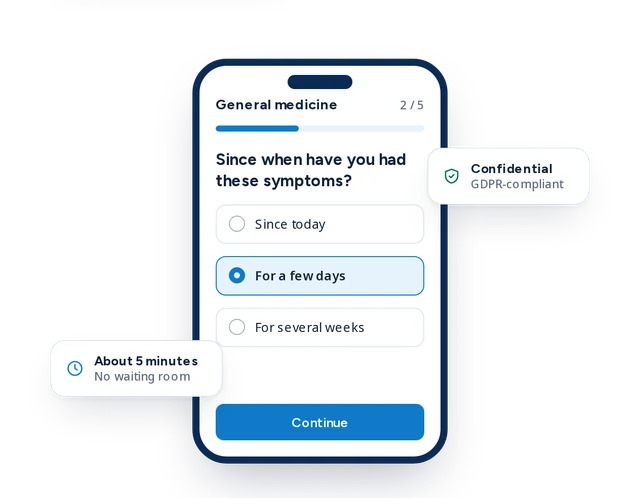
Complete the questionnaire

Brief details about your symptoms

STEP 02

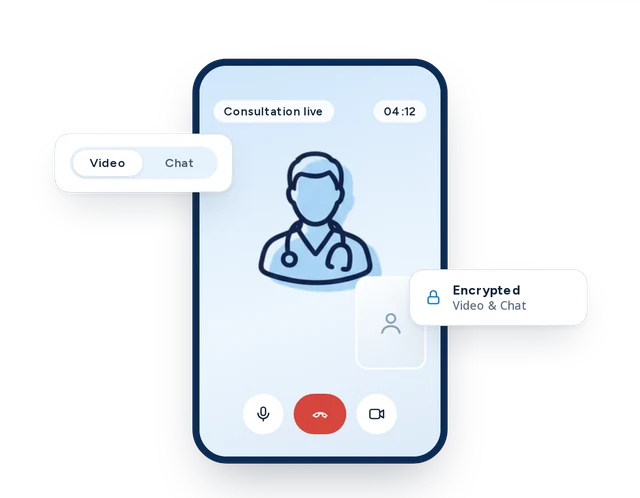
Doctor connects with you

Video consultation within minutes

STEP 03

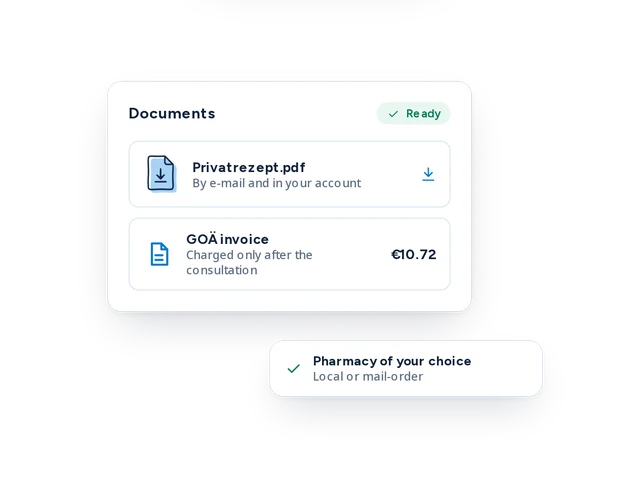
Receive your documents

Prescription, sick note or referral, digitally

Estimated wait

~ min wait

Related treatments

More conditions we treat by video consultation.

AVAILABLE NOW

Video consultation — usually <15 min wait

Medical notice: Not a substitute for an in-person medical examination. The information on this page is intended for general guidance only. In an emergency, please call 112.

Frequently Asked Questions

What is benign positional vertigo?

Benign paroxysmal positional vertigo is the most common cause of spinning dizziness. Small calcium crystals in the inner ear move into the semicircular canals and trigger brief, intense attacks of vertigo with head movements. The condition is harmless and can often be treated well with targeted repositioning manoeuvres, which a doctor can guide you through.

Can dizziness really be assessed in a video consultation?

Many forms of dizziness can be classified through a careful medical history: the type, duration and triggers of the attacks as well as accompanying symptoms provide important clues. Warning signs are also checked systematically during the video consultation. If it turns out that a physical examination or technical diagnostics are needed, you will receive a clear recommendation on how to proceed.

When is dizziness an emergency?

Sudden dizziness together with paralysis, numbness, speech or vision problems, the worst first-ever headache, impaired consciousness or a complete inability to walk can indicate a stroke. In these cases, call the emergency number 112 immediately and do not wait for a video consultation.

How much does a video consultation for dizziness cost?

Billing follows the German medical fee schedule (GOÄ). Privately insured patients usually submit the invoice to their private health insurance or Beihilfe; reimbursement depends on the individual tariff. Self-payers receive a transparent GOÄ invoice. You can see the expected costs before booking.

Will I get a prescription for dizziness?

Following a doctor's assessment, a private prescription can be issued for suitable presentations, for example for short-term symptom-relieving drug classes such as antivertiginous agents. Whether a medication makes sense is decided by the doctor during the consultation. In benign positional vertigo, repositioning manoeuvres are usually the main treatment, as medication does not address the cause.