Short answer
ADHD in adults shows less as fidgeting than as difficulty concentrating, forgetfulness, inner restlessness, impulsivity and problems organising daily life and work. Worldwide about 2.6 percent of adults are affected. An online test gives a first indication; the diagnosis is made by a doctor in a detailed guideline-based interview. At OpenClinic24 a free self-test is followed by a diagnostic video consultation.
Key facts
 About 2.6 percent of adults worldwide have ADHD persisting from childhood, and around 6.8 percent show ADHD symptoms (meta-analysis, Journal of Global Health 2021).
 ADHD is around 70 to 80 percent heritable; symptoms begin before the age of twelve even if they are only noticed in adulthood (Nature Reviews Disease Primers 2024).
 Women receive the diagnosis later on average because inattention without hyperactivity stays inconspicuous for a long time and is often interpreted as anxiety or depression.
 A questionnaire such as the ASRS is a screening tool, not a diagnosis. The German S3 guideline requires a clinical interview, symptoms in at least two areas of life and exclusion of other causes.
 Effective treatment combines education, behavioural therapy or coaching and, if needed, medication; stimulants fall under narcotics law and are only prescribed after a confirmed diagnosis.
How ADHD presents in adulthood
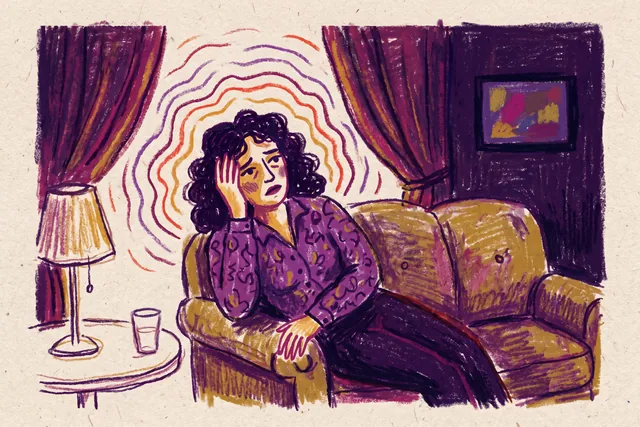
ADHD begins in childhood and most people do not grow out of it. What changes is the picture: the visible hyperactivity of the child becomes the inner restlessness of the adult, running around the classroom becomes the constant feeling of being wired. Attention and self-organisation move to the foreground. Those affected start many things and finish few, lose keys and deadlines, put off unpleasant tasks, lose the thread in conversations, interrupt others, make decisions on impulse and regret them. Emotions come fast and hard: criticism hits disproportionately, frustration tips into anger or withdrawal.
At the same time there is hyperfocus: on topics that captivate them, many people with ADHD work for hours with concentration and productivity. This contrast often leads to the accusation that they could if they only wanted to. In truth it shows the core disorder: not a lack of attention but poorly controllable attention.
Nature Reviews Disease Primers describes the state of research in 2024: ADHD is a neurobiological developmental disorder with heritability of around 70 to 80 percent, differences in networks for attention, reward and self-control and a course that reaches into adulthood for a large proportion. A meta-analysis in the Journal of Global Health estimates that worldwide 2.58 percent of adults have ADHD persisting from childhood and 6.76 percent show ADHD symptoms; in Germany that corresponds to several million people, most of whom were never diagnosed.
Why many are only diagnosed late
Anyone who daydreamed quietly as a child instead of disrupting did not stand out. Anyone who was intelligent compensated at school. Anyone who lived in a structured household had external order. The disorder often only becomes visible when demands exceed compensation: university, first leadership role, parenthood, self-employment. Then come exhaustion, self-doubt and often depression or anxiety, which are then treated while the ADHD underneath remains unrecognised.
Women are particularly affected. They more often show the inattentive type, are less often presented as children and receive the diagnosis years later than men on average, often only when their own child is diagnosed. Hormonal phases with low oestrogen, before the period, after birth and in menopause, intensify symptoms; many describe a collapse in their functioning precisely in these phases.
Self-test: what an online test can and cannot do
The World Health Organization’s ASRS questionnaire is the most widely used screening tool for adults. Its 18 items ask how often typical difficulties occurred in the last six months. A high score means: an assessment makes sense. A high score does not mean: you have ADHD. Sleep deprivation, depression, anxiety disorder, overactive thyroid, chronic stress and some medicines produce similar scores.
The free self-test at OpenClinic24 follows this principle. It takes a few minutes, stores your answers in your account and tells you whether a diagnostic consultation is advisable. Anyone who scores low but has recognised themselves in the patterns described for years should still talk to someone: questionnaires miss people who compensate strongly.
Free self-test and diagnostic consultation
Complete the ASRS-based self-test in a few minutes. If indicated, a 45 to 60 minute video consultation with Adi Zoabi MD, general medicine, follows, with a written report.
Start the self-testHow guideline-based diagnosis works
The German S3 guideline on ADHD and the British NICE guideline describe the same core: the diagnosis is clinical. There is no blood test, no brain scan, no computer test that confirms it alone. What is needed:
- Current symptoms. Under DSM-5, at least five symptoms of inattention or of hyperactivity and impulsivity that have persisted for at least six months. ICD-11 lists ADHD under 6A05 with comparable criteria.
- Onset in childhood. Several symptoms must have been present before the age of twelve. School reports, memories and, where possible, accounts from parents or siblings are used; questionnaires such as the Wender Utah scale help.
- Several areas of life. The symptoms impair work or education, relationships, household or leisure, not just one area.
- Exclusion of other causes. Depression, anxiety, bipolar disorder, sleep disorders, substance use disorders, thyroid dysfunction, trauma and medication effects are asked about and clarified via laboratory tests or specialists if needed.
- Co-occurring conditions. Up to three quarters of adults with ADHD have at least one other mental health condition; it influences the order of treatment.
At OpenClinic24, Adi Zoabi MD conducts this diagnostic consultation by video. It lasts 45 to 60 minutes, ends with a classification under DSM-5 and ICD-11 and a written report. It costs €61.67 under the GOÄ (no. 1 consultation, no. 801 in-depth psychiatric examination, no. 75 written report, each at factor 2.3); €10.72 is reserved at booking. If laboratory values or a physical examination are needed, we coordinate this with your GP.
Treatment: what works
The guidelines recommend a multimodal approach whose components depend on severity and life situation.
Psychoeducation. Understanding that forgetfulness and procrastination are not character flaws already changes self-image and relationships with partners and colleagues for many.
Psychotherapy and coaching. Cognitive behavioural therapy adapted to ADHD trains time planning, prioritising, dealing with distraction and emotion regulation. ADHD coaching addresses the same points in a practical way. External structure works: fixed routines, visible lists, timers, one place for keys and papers, breaking tasks into small steps.
Medication. With moderate to severe impairment, stimulants are first choice: methylphenidate and lisdexamfetamine clearly improve attention, impulse control and mood stability in about two thirds of those treated, often within days. Atomoxetine is a non-stimulant alternative with slower onset. Side effects include reduced appetite, sleep problems, increases in heart rate and blood pressure; blood pressure and pulse checks are therefore part of treatment. Stimulants are subject to the Narcotics Prescription Ordinance; a prescription requires a confirmed diagnosis and personal medical knowledge of the patient. Whether and which medication is an option is discussed in the diagnostic consultation and recorded in the report.
Lifestyle. Regular sleep, endurance sport and avoiding alcohol and cannabis as self-medication measurably improve symptoms and make every other treatment more effective.
The international consensus statement of the World Federation of ADHD summarises 208 evidence-based conclusions, including: untreated ADHD increases the risk of accidents, injuries, substance use, unemployment and relationship breakdown; treatment reduces these risks. That is the strongest argument for an assessment, even at 40 or 50.
ADHD at work and in relationships
At work, a few clear agreements help more than willpower: written tasks with deadlines, a workplace with few interruptions, longer tasks divided into blocks, short movement breaks, no meetings without an agenda. You are not obliged to disclose the diagnosis. Those who do can claim reasonable adjustments if a disability is recognised; the degree of disability is decided by the pension office.
In relationships it helps when both understand that forgetting does not mean indifference. Couples benefit from shared calendars, fixed agreements and refraining from accusations aimed at character. With strong emotional outbursts, targeted therapy for emotion regulation is worthwhile.
Common co-occurring conditions
Depression, anxiety disorders, sleep disorders, substance use disorders and eating disorders occur significantly more often in adults with ADHD. They are often the reason someone seeks help at all. The order of treatment depends on severity: acute depression or a substance use disorder is stabilised first, then the ADHD is treated. Conversely, effective ADHD treatment frequently also improves mood and sleep because daily life works again.
If you recognise yourself in this text: the first step is a conversation, not a verdict. A diagnosis takes nothing away. It explains, and it opens treatment paths that are proven to work.
When you need help immediately
- Thoughts of taking your own life or concrete plans: Telefonseelsorge 0800 111 0 111 around the clock, in acute danger 112
- Chest pain, palpitations or fainting on stimulants
- Persistent sleeplessness over several nights with confusion or delusions
- Severe depressive crisis with inability to care for yourself
With these warning signs call the emergency number 112. Outside office hours the medical on-call service is available on 116 117. In these situations a video consultation does not replace an in-person examination.
Sources
- Attention-deficit/hyperactivity disorder. Nature Reviews Disease Primers, 2024. DOI: 10.1038/s41572-024-00495-0 Review
- The prevalence of adult attention-deficit hyperactivity disorder: A global systematic review and meta-analysis. Journal of Global Health, 2021. DOI: 10.7189/jogh.11.04009 Study
- The World Federation of ADHD International Consensus Statement: 208 Evidence-based conclusions about the disorder. Neuroscience and Biobehavioral Reviews, 2021. DOI: 10.1016/j.neubiorev.2021.01.022 Review
- Attention-deficit hyperactivity disorder. The Lancet, 2020. DOI: 10.1016/S0140-6736(19)33004-1 Review
- Adult Attention Deficit-Hyperactivity Disorder. New England Journal of Medicine, 2013. DOI: 10.1056/NEJMcp1212625 Review
- Life expectancy and years of life lost for adults with diagnosed ADHD in the UK: matched cohort study. British Journal of Psychiatry, 2025. DOI: 10.1192/bjp.2024.199 Study
- S3 guideline ADHD in children, adolescents and adults (AWMF register no. 028-045). DGKJP, DGPPN, DGSPJ, AWMF, 2018. Guideline
- Attention deficit hyperactivity disorder: diagnosis and management (NICE guideline NG87). National Institute for Health and Care Excellence, 2019. Guideline
- Narcotics Prescription Ordinance (BtMVV). Federal Ministry of Justice, gesetze-im-internet.de, 2026. Law
All sources were retrieved during the medical review. Studies are linked by DOI; guidelines and laws in their current version.
Frequently Asked Questions
What are the symptoms of ADHD in adults?
Typical are difficulty concentrating on routine tasks, forgetfulness, losing things, procrastination, problems with time planning and order, inner restlessness instead of visible hyperactivity, impulsivity in conversations and decisions, strong mood swings and quick frustration. Many also report hyperfocus on interesting tasks. What matters is that the symptoms have existed since childhood and cause problems in several areas of life.
How does an ADHD test for adults work?
An online test such as the World Health Organization's ASRS questionnaire asks about typical symptoms in a few minutes and indicates whether an assessment makes sense. It does not replace a diagnosis. The actual assessment is a structured interview of 45 to 60 minutes about childhood, school, work, relationships and co-occurring conditions, supplemented by childhood questionnaires and reports from relatives where possible.
Can ADHD be diagnosed online?
Yes, if the assessment meets guideline standards: a detailed clinical interview, review of childhood symptoms, exclusion of depression, anxiety, sleep disorders, thyroid or substance use disorders and a written report. At OpenClinic24, Adi Zoabi MD conducts the diagnostic consultation by video; it lasts 45 to 60 minutes and costs €61.67 under the GOÄ. Physical examinations or laboratory values are added via your GP if needed.
Why is ADHD in women often recognised late?
Women and girls more often show the inattentive type without disruptive hyperactivity, compensate through effort and present with anxiety, depression or exhaustion instead. Many are diagnosed only around 30 or 40, often after a child has been diagnosed. Hormonal fluctuations in the cycle and in menopause can intensify symptoms; that belongs in the history.
How is ADHD treated in adults?
The S3 guideline recommends multimodal treatment: psychoeducation, cognitive behavioural therapy or ADHD coaching on time management, structure and emotion regulation, treatment of co-occurring conditions and, with marked impairment, medication. First choice are stimulants such as methylphenidate or lisdexamfetamine, alternatively atomoxetine. They clearly improve attention and impulse control in around two thirds of those treated.
Can ADHD medication be prescribed by video?
Methylphenidate and lisdexamfetamine fall under narcotics law. A prescription requires a confirmed diagnosis, exclusion of contraindications such as untreated high blood pressure or heart rhythm disorders and personal medical knowledge of the patient. Whether and how medication is started or continued is decided by the doctor in the diagnostic consultation; at OpenClinic24 this is recorded in the report and the plan for next steps.
Is ADHD a disability and a disadvantage at work?
Depending on severity, ADHD can be recognised as a disability in Germany; the degree of disability is decided by the pension office under the medical assessment ordinance. At work you are not obliged to disclose the diagnosis. Many benefit from simple adjustments: clear task lists, fewer interruptions, written agreements, movement breaks. With treatment, absences and accident risks fall measurably.
Does ADHD shorten life expectancy?
A British cohort study in the British Journal of Psychiatry 2025 found a life expectancy around seven years (men) and nine years (women) lower in adults with diagnosed ADHD. The cause is not ADHD itself but more frequent accompanying problems: accidents, smoking, substance use disorders, depression and untreated physical illness. The international consensus statement shows that treatment lowers these risks; the diagnosis is a starting point, not a prognosis.

About the author
Note: This article provides general information and does not replace individual medical advice, diagnosis or treatment. If you have symptoms, contact a doctor; in an emergency call 112.