

Cough & Dry Cough

Cough is one of the most common symptoms in general practice and is usually the result of a respiratory infection. In the video consultation, our doctors assess duration, triggers and warning signs and discuss symptomatic treatment with you. Following the doctor's assessment, a private prescription or a sick note may be issued.

12 doctors available now

Overview

Coughing is a protective reflex by which the airways expel mucus, pathogens and foreign particles. It is therefore not a disease in itself but a symptom with many possible causes. Medically, cough is classified above all by its duration: an acute cough lasts up to eight weeks and is usually the result of a viral infection of the upper airways; it typically resolves on its own. A cough persisting for more than eight weeks is considered chronic and should be specifically evaluated. A further distinction is made between a dry, tickly cough without sputum and a productive cough with mucus. In the video consultation, our doctors ask about duration, course, accompanying symptoms and possible warning signs. On this basis they discuss symptomatic treatment with you; following the doctor's assessment, a private prescription, a sick note or a recommendation for further in-person evaluation may be issued.
Common causes

By far the most common cause of an acute cough is a viral infection of the upper airways, such as a common cold or acute bronchitis. After such an infection, a dry cough can persist for several weeks as a so-called post-infectious cough without necessarily being dangerous. Other possible causes include sinusitis with mucus draining down the throat, allergies such as hay fever, bronchial asthma and heartburn with reflux of stomach acid. In smokers, so-called smoker's cough is common; it can be a sign of chronic bronchitis or COPD. Certain medication classes, for example some blood pressure drugs (ACE inhibitors), can also trigger a dry cough. Less commonly, pneumonia, whooping cough or other serious conditions are the underlying cause – which is precisely why duration and accompanying symptoms are decisive for the doctor's assessment.

When to see a doctor

An acute cough in the context of a common cold can usually be treated symptomatically at first. You should have the cough medically evaluated if it lasts longer than eight weeks, worsens noticeably again after initial improvement or is accompanied by high fever for more than three days. Warning signs also include bloody sputum, unintentional weight loss, marked night sweats, breathing noises such as wheezing, and cough in people with known heart or lung disease or a weakened immune system. Prompt medical review is also advisable for young children, during pregnancy and in the case of a barking cough with breathing difficulty. Call emergency services on 112 immediately in case of acute shortness of breath, blue discolouration of the lips, severe chest pain, confusion or a suspected inhaled foreign body. The video consultation helps you assess these situations – but in an emergency it never replaces the ambulance service.

Symptoms & Indications

Dry, tickly cough without sputum Productive cough with mucus (sputum) Scratchy, dry feeling in the throat Coughing fits, especially at night or when lying down Hoarseness and a rough voice Burning or soreness behind the breastbone when coughing Accompanying runny nose or mild cold symptoms Cough persisting after an infection has cleared (post-infectious cough)

Treatment Options

  • Adequate fluid intake and physical rest
  • Inhalation with steam or isotonic saline
  • Cough-suppressant drug classes (antitussives) for distressing dry cough – following the doctor's assessment
  • Mucolytic drug classes (expectorants) for productive cough
  • Herbal cough preparations, for example with ivy, thyme or primrose root
  • Honey and lozenges to soothe irritation (no honey for children under one year)
  • Stopping smoking and avoiding irritants

Important Notes

  • A video consultation does not replace a physical examination: listening to the lungs, X-rays or laboratory tests cannot be performed remotely. For unclear or persistent symptoms, an in-person visit to a practice may be necessary.
  • See a doctor in person promptly if the cough lasts longer than eight weeks, if you cough up blood, if high fever persists for several days or if you are losing weight unintentionally.
  • In case of acute shortness of breath, blue discolouration of the lips, severe chest pain or a suspected inhaled foreign body, call emergency services on 112 immediately.
HOW IT WORKS

How OpenClinic24 works

STEP 01

Complete the questionnaire

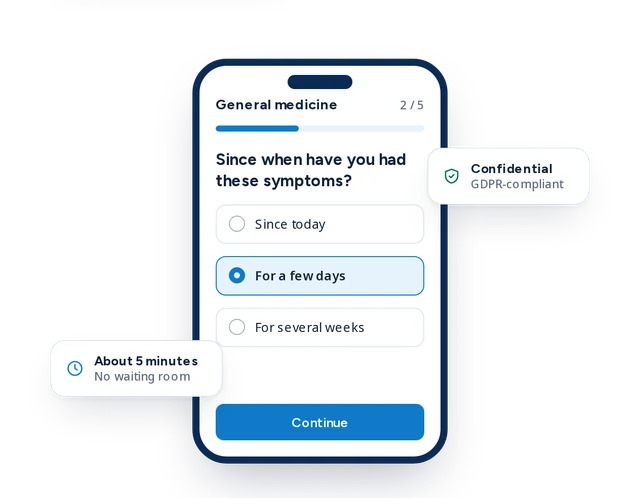
Brief details about your symptoms

STEP 02

Doctor connects with you

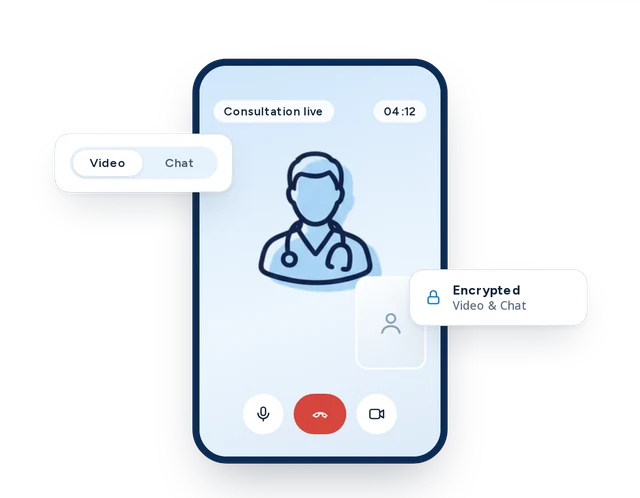
Video consultation within minutes

STEP 03

Receive your documents

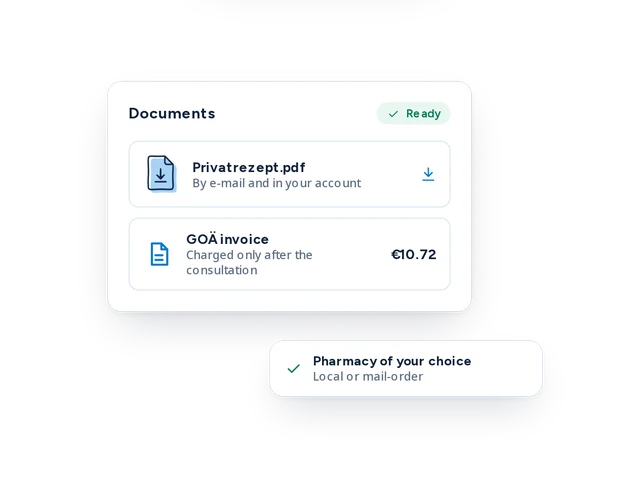
Prescription, sick note or referral, digitally

Estimated wait

~ min wait

Related treatments

More conditions we treat by video consultation.

AVAILABLE NOW

Video consultation — usually <15 min wait

Medical notice: Not a substitute for an in-person medical examination. The information on this page is intended for general guidance only. In an emergency, please call 112.

Frequently Asked Questions

When is a cough considered chronic – and what does that mean for me?

A cough lasting longer than eight weeks is considered chronic. It should be specifically evaluated by a doctor, because causes such as asthma, reflux, chronic bronchitis or medication side effects then also come into consideration. An initial assessment can take place in the video consultation; in many cases an additional in-person examination is advisable, for example with lung function testing or an X-ray.

Can I get a prescription for cough in the video consultation?

Following the doctor's assessment, a private prescription may be issued, for example for cough-suppressant or mucolytic drug classes. Whether a medication is appropriate depends on the type and duration of the cough as well as on your pre-existing conditions. There is no entitlement to a specific prescription; the decision rests with the treating doctor.

What does the video consultation for cough cost and who covers the costs?

Billing is carried out as a private medical service according to the German medical fee schedule (GOÄ). Privately insured patients can usually submit the invoice to their private health insurer; reimbursement depends on the individual plan. Self-payers receive a transparent GOÄ invoice. Patients with statutory insurance can also use the service as self-payers; statutory health insurers do not usually reimburse the costs.

Can I also get a sick note for a cough via video?

Yes, following the doctor's assessment, a certificate of incapacity for work can be issued as part of the video consultation if your symptoms justify it. The doctor determines its duration and scope individually. In severe or unclear cases, an in-person examination may be recommended instead.

What helps against a dry cough at night?

Drinking enough fluids, honey (not for children under one year), lozenges and sleeping with the upper body slightly elevated often soothe the irritation. Dry indoor heating air can be eased by airing the room or hanging up damp cloths. If sleep is significantly disturbed by a distressing dry cough, a cough-suppressant drug class may be appropriate temporarily, following the doctor's assessment.