


Rosacea & couperose

Rosacea is a chronic inflammatory skin condition of the face characterised by persistent redness, visible small blood vessels and inflammatory papules. Couperose is considered an early, vascular form with permanently dilated vessels on the cheeks and nose. Following a medical assessment based on photos, a prescription-only long-term therapy can be initiated.

12 doctors available now

Overview

Rosacea is one of the most common chronic inflammatory skin conditions of the face and is estimated to affect several million people in Germany, mostly between the ages of 30 and 60. Typical signs are persistent redness of the cheeks, nose, forehead and chin, visibly dilated small blood vessels and, in later stages, inflammatory bumps and pustules. Couperose refers to the early, vascular form with fine, permanently visible vessels. The condition progresses in flare-ups and, if left untreated, can slowly worsen. Because the changes appear on the face, the distress for many affected people is considerable. A causal cure is currently not possible, but with consistent treatment the symptoms can usually be relieved significantly. Prescription-only topical agents such as metronidazole or ivermectin, used as long-term therapy, have proven effective. At OpenClinic24 you upload photos of your skin; following a medical assessment, a private prescription for a suitable therapy can be issued.

Common causes

The exact causes of rosacea have not been conclusively established. It is assumed to result from an interplay of hereditary predisposition, impaired regulation of the blood vessels in the face and an overactive immune response of the skin. Increased colonisation with the Demodex hair follicle mite also appears to play a role; this is one of the targets of the active agent ivermectin. In addition, there are numerous triggers that can provoke flare-ups: UV radiation, heat and cold, rapid temperature changes, spicy food, hot drinks, alcohol, emotional stress and irritating cosmetics. Certain vasodilating medicines can also intensify redness. Which triggers are relevant varies from person to person. A symptom diary helps to identify personal triggers and avoid them specifically — an important element alongside drug therapy.

When to see a doctor

A medical evaluation is advisable if facial redness persists for weeks, dilated small vessels become visible, or inflammatory bumps and pustules occur repeatedly. You should also seek medical advice if over-the-counter skin care products bring no improvement or your skin condition keeps deteriorating. Warning signs that require a prompt in-person visit include: eye involvement with persistently red, burning or light-sensitive eyes as well as visual disturbances; rapidly increasing, painful swelling of the face; fever combined with pronounced skin redness; or weeping, rapidly spreading skin changes. Such symptoms may indicate an infection or another condition and require an in-person medical examination. In case of shortness of breath, difficulty swallowing or rapidly increasing swelling of the lips, tongue or throat, call the emergency number 112 immediately.

Symptoms & Indications

Persistent redness of the cheeks, nose, forehead and chin Visibly dilated small blood vessels (couperose, telangiectasia) Sudden episodes of heat and flushing Inflammatory bumps and pustules (papules and pustules) Burning, stinging or a feeling of tightness in the facial skin Sensitive, easily irritated and dry skin Dry, red or irritated eyes (ocular rosacea) Thickening of the skin, especially on the nose (rhinophyma)

Treatment Options

  • Topical long-term therapy with anti-inflammatory agents such as metronidazole or ivermectin — as prescribed by a doctor
  • Creams or gels containing azelaic acid to reduce papules and redness
  • For severe courses: systemic antibiotics from the tetracycline class, subject to medical assessment
  • Consistent sun protection with a high sun protection factor
  • Mild, low-irritant skin care free of alcohol and fragrances
  • Keeping a trigger diary and avoiding individual triggers such as spicy food, alcohol or heat
  • Vasoconstrictive gels for persistent redness — on a case-by-case basis after medical assessment

Important Notes

  • Telemedicine photo diagnosis is well suited to typical courses of rosacea. In case of unclear skin findings or lack of improvement, an in-person visit to a dermatology practice may be necessary.
  • If the eyes are affected — persistently red, burning or light-sensitive eyes — an additional in-person ophthalmological examination is recommended.
  • Sudden, painful swelling of the face accompanied by fever is a warning sign and must be evaluated by a doctor promptly.
  • In case of shortness of breath, difficulty swallowing or rapidly increasing swelling of the lips, tongue or throat, call the emergency number 112 immediately.
HOW IT WORKS

How OpenClinic24 works

STEP 01

Complete the questionnaire

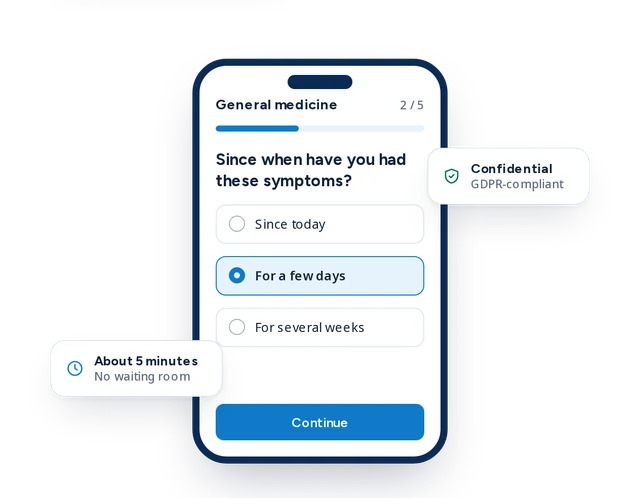
Brief details about your symptoms

STEP 02

Doctor connects with you

Video consultation within minutes

STEP 03

Receive your documents

Prescription, sick note or referral, digitally

Estimated wait

~ min wait

Related treatments

More conditions we treat by video consultation.

AVAILABLE NOW

Video consultation — usually <15 min wait

Medical notice: Not a substitute for an in-person medical examination. The information on this page is intended for general guidance only. In an emergency, please call 112.

Frequently Asked Questions

Can rosacea be treated via photo diagnosis?

Yes, in many cases rosacea can be assessed well on the basis of clear photos. You upload pictures of the affected skin areas and complete a structured medical questionnaire. Following a medical assessment, a prescription-only therapy, for example with metronidazole or ivermectin, can then be initiated. If the findings are unclear, the doctor will refer you to a local practice.

What does the treatment cost and will my insurance cover it?

Billing is carried out as a private medical service according to the German scale of fees for physicians (GOÄ). Privately insured patients can usually submit the invoice to their private health insurer; reimbursement depends on the individual plan. Self-paying patients receive a transparent overview of the costs before treatment begins. Patients with statutory insurance can use the service as self-payers.

Can rosacea be cured?

Rosacea is a chronic condition that, according to current knowledge, cannot be cured but can usually be controlled well. The aim of treatment is to reduce inflammation and redness and to prevent new flare-ups. Long-term therapy combined with consistent trigger avoidance is often useful for this. Treatment success is reviewed medically over time.

How long does it take for the therapy to work?

Topical agents for rosacea usually take effect gradually over several weeks. An initial improvement is often seen after about four weeks, while the full effect frequently appears only after two to three months. Do not stop the treatment on your own; instead, discuss the course with your treating doctor.

How does rosacea differ from acne?

Both conditions can cause papules and pustules on the face, but they differ clearly. In rosacea there are no blackheads (comedones); instead, persistent redness, dilated vessels and flushing episodes are typical. The treatment differs accordingly, and some acne products can additionally irritate rosacea-prone skin. A medical assessment helps to choose the appropriate therapy.