Overview
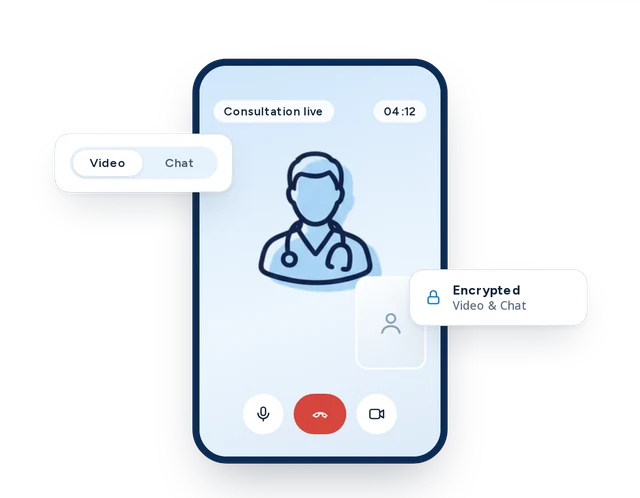
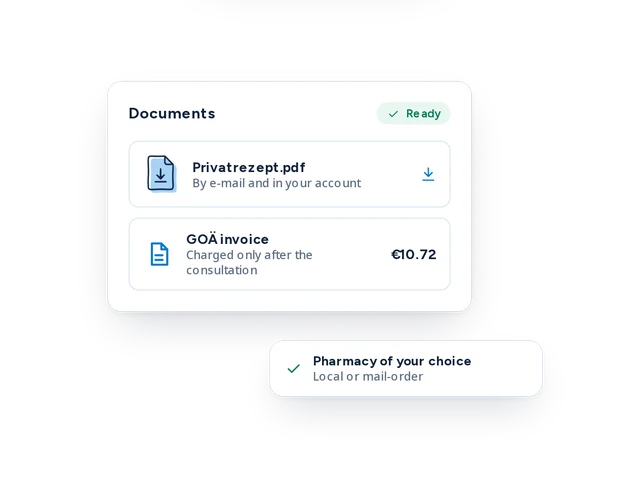
Lumbago – known in German as 'Hexenschuss' and medically as acute low back pain – refers to suddenly occurring, usually one-sided pain in the lower back. Typically, a shooting pain strikes during an everyday movement such as bending over, lifting or twisting the upper body. Many of those affected involuntarily adopt a bent-forward protective posture and can hardly straighten up. In most cases the underlying problem is a painful dysfunction of the muscles and small vertebral joints; there is usually no structural damage. Uncomplicated lumbago often improves noticeably within a few days to weeks. In an OpenClinic24 video consultation, you discuss your symptoms with a physician. Based on the medical assessment, short-term pain therapy, for example with non-steroidal anti-inflammatory drugs (NSAIDs), may be prescribed as a private prescription. If symptoms persist for more than twelve weeks, this is referred to as chronic back pain, which should be evaluated separately and is covered on its own page.
Common causes
Lumbago usually results from a combination of several factors. Frequent triggers are jerky or unaccustomed movements, lifting heavy loads from a bent position, abrupt twisting of the trunk, and prolonged work in an unfavourable posture. Contributing factors include weak core muscles, long periods of sitting, lack of exercise and excess weight. Cold, draughts and muscular tension, for example due to stress, can also play a role. In the majority of those affected, the condition is so-called non-specific back pain, in which there is no serious structural cause. Less commonly, a herniated disc, degenerative changes of the spine or – very rarely – inflammatory diseases, fractures or tumours are behind the symptoms. A careful medical history helps to identify indications of such rarer causes and, if necessary, to arrange further in-person examination.
When to see a doctor
In many cases, uncomplicated lumbago can initially be assessed well via telemedicine. You should seek medical advice if the pain is very severe, does not improve after a few days, or keeps recurring. A prompt examination in a medical practice is advisable if the pain radiates into the leg below the knee, if you experience tingling or numbness, after a fall or accident, in case of fever, unintended weight loss or night-time pain at rest, and if you have known osteoporosis or a tumour disease. Call the emergency number 112 immediately if paralysis occurs in the legs, if you notice numbness in the genital or buttock area, or if you lose control of your bladder or bowel. These can be signs of cauda equina syndrome, which must be treated as an emergency without delay.