


Scabies

Scabies is a contagious skin condition caused by the itch mite Sarcoptes scabiei. Typical signs are intense itching, especially at night, and fine mite burrows in the skin. After a medical assessment based on photos and your history, treatment with a topical antiscabietic, such as a permethrin-containing cream, can be prescribed via private prescription.

12 doctors available now

Overview

Scabies is a contagious skin disease caused by the itch mite Sarcoptes scabiei. The female mites dig fine burrows into the uppermost layer of the skin and lay their eggs there. The immune system's reaction to the mites, their eggs and their excretions causes the characteristic, tormenting itch, which becomes markedly worse at night and in the warmth of the bed. Scabies is not a sign of poor hygiene and occurs in all population groups; in recent years, case numbers in Germany have risen considerably again. Many affected people delay seeing a doctor out of shame – yet the condition is very treatable. At OpenClinic24 you describe your symptoms discreetly via a structured questionnaire and upload photos of the affected skin areas. Following medical assessment, a topical antiscabietic, such as a permethrin-containing cream, can be prescribed via private prescription. If the findings are unclear, you receive a clear recommendation for further in-person evaluation.
Common causes

Scabies is transmitted almost exclusively through prolonged, direct skin-to-skin contact – brief touches such as shaking hands are generally not sufficient. Typical transmission routes are living in the same household, sharing a bed, close physical contact when cuddling with children, and sexual contact. Outbreaks also occur repeatedly in community facilities such as daycare centres, schools, care homes or shared accommodation. Indirect transmission via clothing, bed linen or upholstered furniture is less common but possible, as the mites can survive outside the body for a few days. With a first infection, it usually takes two to five weeks from infection to the first symptoms; with reinfection, the itching often starts after only a few days. During this period, affected people can already be contagious without knowing it.

When to see a doctor

Medical evaluation is advisable as soon as scabies is suspected – especially with itching that is worse at night, visible mite burrows, or when several people in the household are affected. Without treatment, the condition does not usually resolve on its own. You should be examined in person promptly if there are warning signs of a bacterial superinfection such as fever, rapidly spreading redness, warmth, pus formation or severe skin pain. Extensively crusted skin changes (suspected crusted scabies), symptoms in infants, pregnant women or immunocompromised people, and a lack of improvement despite correctly performed treatment also belong in a local practice. If there are signs of a severe general reaction – such as shortness of breath, impaired consciousness, confusion or circulatory collapse – call emergency services 112 immediately.

Symptoms & Indications

Intense itching that worsens at night and in the warmth of the bed Fine, irregularly winding lines in the skin (mite burrows) Small reddish nodules, blisters or pustules Involvement of typical sites: finger webs, wrists, armpits, nipples, genital area Scratch marks, crusts and excoriated skin Eczema-like, widespread skin changes Itching affecting several people in the same household Sleep disturbance caused by the persistent itching

Treatment Options

  • Topical antiscabietics (e.g. permethrin-containing cream) as prescribed by a doctor
  • In selected cases, oral antiscabietics following medical assessment
  • Antihistamines to relieve the itching
  • Emollient basic skin care to soothe the irritated skin
  • Hygiene measures: wash clothing and bedding at a minimum of 60 °C, store non-washable textiles in sealed plastic bags for several days
  • Simultaneous treatment of close contacts following medical assessment
  • Medical follow-up of treatment success after about two weeks

Important Notes

  • Photo-based diagnosis has limits: if the skin findings are unclear or dermatoscopic examination seems necessary, our doctors will refer you to a local practice.
  • In case of fever, spreading redness, pus formation or heavily crusted, extensive skin changes (suspected crusted scabies), a prompt in-person medical examination is required.
  • For infants, pregnant women and people with a weakened immune system, an in-person medical consultation is usually the safer option.
  • If you notice signs of a severe general reaction such as shortness of breath, impaired consciousness or circulatory collapse, call emergency services 112 immediately.
  • Anyone attending or working in a community facility (e.g. daycare, school, care home) must inform the facility in case of scabies; attendance is only permitted again once treatment has started (Section 34 of the German Infection Protection Act).
HOW IT WORKS

How OpenClinic24 works

STEP 01

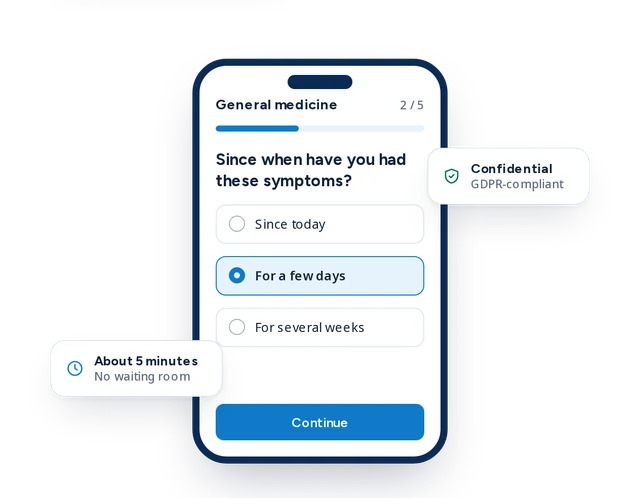
Complete the questionnaire

Brief details about your symptoms

STEP 02

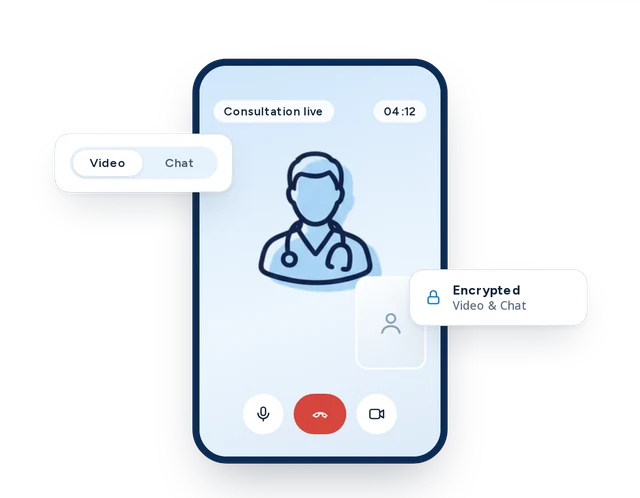
Doctor connects with you

Video consultation within minutes

STEP 03

Receive your documents

Prescription, sick note or referral, digitally

Estimated wait

~ min wait

Related treatments

More conditions we treat by video consultation.

AVAILABLE NOW

Video consultation — usually <15 min wait

Medical notice: Not a substitute for an in-person medical examination. The information on this page is intended for general guidance only. In an emergency, please call 112.

Frequently Asked Questions

Can scabies really be diagnosed from photos?

In many cases, yes: mite burrows, the typical distribution of the skin changes and the description of nocturnal itching often add up to a meaningful picture. You upload sharp photos of the affected skin areas and answer targeted questions. If the findings remain unclear, the doctor will recommend an in-person examination – a reliable diagnosis always takes priority over speed.

Will I receive a private prescription for a permethrin cream?

Following medical assessment, a private prescription for a topical antiscabietic, such as a permethrin-containing cream, can be issued. A prescription is not issued automatically, but only if the doctor considers the diagnosis sufficiently certain and there are no reasons against it. You receive the prescription digitally and can redeem it at any pharmacy.

What does the treatment cost and will my insurance cover it?

Billing is a private medical service according to the German medical fee schedule (GOÄ); you see the exact price transparently before booking. Privately insured patients can usually submit the invoice to their private health insurer; reimbursement depends on the individual plan. Patients with statutory insurance can use the service as self-payers; reimbursement by the statutory fund is usually not provided. The cost of the medication at the pharmacy is additional.

Is scabies a sign of poor hygiene?

No. Scabies is transmitted through prolonged skin-to-skin contact and can affect anyone, regardless of personal hygiene or living circumstances. Frequent washing does not prevent infection, as the mites live in deeper layers of the skin. There is therefore no reason for shame – what matters is early, consistent treatment, including of close contacts.

How long am I contagious and what should I do at home?

With ordinary scabies, you are generally considered no longer contagious after the first correctly performed treatment. Close contacts should be treated at the same time, following medical assessment, to avoid mutual reinfection. Clothing, bed linen and towels should be washed at a minimum of 60 °C or stored in sealed plastic bags for several days. Itching may persist for several weeks after successful treatment without this meaning the infection is still active.