


Overview
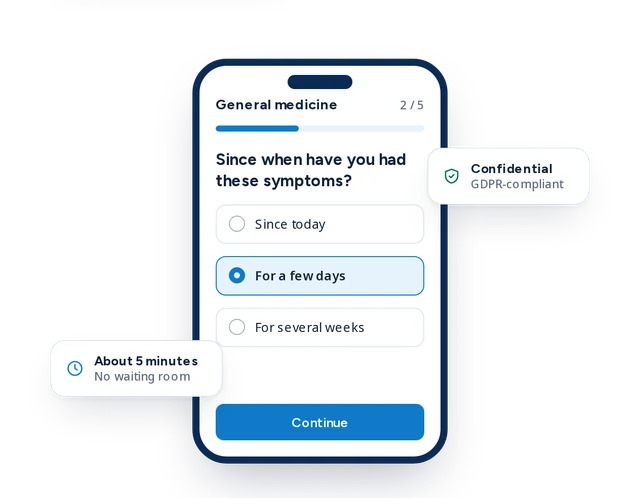
Nail fungus and athlete's foot are among the most common infections of the skin and nails: it is estimated that around one in ten adults in Germany is affected, with the proportion rising markedly with age. Nevertheless, many people put off seeing a doctor – discoloured, thickened nails and flaking skin between the toes are a subject associated with embarrassment. This is precisely where telemedical treatment comes in: you upload photos of your nails or feet, answer a structured medical questionnaire and receive a physician's assessment without having to sit in a waiting room. Following the physician's assessment, a private prescription may be issued for topical antifungals – such as creams, sprays or medicated nail lacquer – or, in cases of extensive nail involvement, for systemic antifungals in tablet form. Left untreated, fungal nail infections do not usually heal on their own but slowly continue to spread. Early, consistent treatment considerably improves the outlook and at the same time protects those around you from infection.
Common causes
In most cases the cause is filamentous fungi (dermatophytes), less commonly yeasts or moulds. They thrive in a warm, moist environment such as that found in closed shoes, sports shoes and the spaces between the toes. Typical places of infection are swimming pools, saunas, changing rooms and hotel carpets, but also shared towels or shoes. The infection frequently begins as athlete's foot between the toes and spreads from there to the nails. Contributing factors include older age, diabetes mellitus, circulatory disorders of the legs, a weakened immune system, heavy sweating and repeated minor nail injuries, for example from tight footwear or sport. A family predisposition also plays a role. Since the contributing conditions usually persist, consistent prevention – dry feet, breathable shoes, hygiene – is crucial alongside treatment in order to avoid relapses.
When to see a doctor
A telemedical assessment is suitable for typical, uncomplicated cases. You should be examined by a doctor in person if large parts of several nails are affected, the diagnosis is unclear or treatment fails to work over months despite consistent use – in these situations, taking a sample to identify the fungus is often advisable. People with diabetes mellitus, circulatory disorders or a weakened immune system should also visit a practice promptly, as foot infections can take a more severe course in these groups. Warning signs of an accompanying bacterial infection include rapidly progressing redness, swelling and warmth of the foot or lower leg, purulent discharge, severe pain and fever – in these cases, go to an emergency department without delay. If there are signs of a severe systemic reaction such as high fever with chills, confusion, shortness of breath or circulatory weakness, call the emergency number 112 immediately.