
Bronchial asthma

Bronchial asthma is a chronic inflammatory disease of the airways that can cause episodic shortness of breath, coughing and wheezing. For patients whose asthma is stable and well controlled, a repeat prescription for their existing inhaler therapy can be issued after medical assessment in a video consultation.

12 doctors available now

Overview

Bronchial asthma is one of the most common chronic diseases of the airways. The bronchi are persistently inflamed and react with hypersensitivity to certain triggers. Typical features are episodic shortness of breath, a dry cough, tightness in the chest and wheezing, often at night or in the early morning. Between episodes, symptoms may be completely absent. With consistent inhaler therapy, asthma can be well controlled in most people, allowing a largely normal life. For patients whose asthma is stable and well controlled, the video consultation offers a straightforward way to discuss ongoing treatment: after medical assessment, a repeat private prescription for the existing inhaler therapy can be issued. Important to know: the online consultation complements care, but it replaces neither regular check-ups with lung function testing nor the treatment of acute deteriorations. If signs of a severe asthma attack occur, call the emergency number 112 immediately.
Common causes

Asthma arises from an interplay of hereditary predisposition and environmental factors. In allergic asthma, allergens such as pollen, house dust mites, animal dander or mould spores trigger the inflammatory reaction; it often begins in childhood or adolescence and frequently occurs together with hay fever or atopic dermatitis. In non-allergic asthma, other triggers predominate, such as respiratory infections, cold air, physical exertion, tobacco smoke, air pollutants or certain painkillers. Many people have mixed forms in which several triggers play a role. Occupational exposures such as flour dust or chemicals can also cause or worsen asthma. Regardless of the cause, those who know and avoid their personal triggers can often reduce their symptoms considerably. Medical advice helps to narrow down triggers and adjust the therapy accordingly.

When to see a doctor

Call the emergency number 112 immediately if warning signs of a severe asthma attack occur: pronounced shortness of breath at rest, inability to speak in full sentences, bluish discolouration of the lips or fingernails, reliever medication that is not working, or increasing exhaustion up to drowsiness. A prompt medical consultation – in a practice or initially via video consultation – is advisable if you need your reliever medication more often than usual, repeatedly wake at night because of breathlessness or coughing, notice a marked drop in your physical capacity, or your peak-flow readings are falling. If your inhaler is running low, arrange a repeat prescription in good time so that there is no gap in treatment. Unclear breathing complaints without a confirmed diagnosis should be evaluated in a practice with lung function testing.

Symptoms & Indications

Episodic shortness of breath, often at night or in the early morning Wheezing or whistling sounds when breathing Dry, irritating cough, especially during exertion or in cold air Tightness in the chest Prolonged, laboured exhalation Symptoms after contact with allergens such as pollen, house dust mites or animal dander Reduced physical capacity during a period of worsening Increased need for reliever medication

Treatment Options

  • Continuation of an existing inhaler therapy with inhaled corticosteroids (repeat prescription possible after medical assessment)
  • Reliever medication with short-acting bronchodilators after medical assessment
  • Combination inhalers containing an inhaled corticosteroid and a long-acting bronchodilator where already prescribed
  • Review and training of inhaler technique
  • Advice on avoiding triggers such as allergens, tobacco smoke or cold air
  • Guidance on self-monitoring, for example with a peak-flow diary
  • Advice on breathing techniques and physical exercise outside acute phases

Important Notes

  • In case of severe shortness of breath, inability to speak in full sentences, bluish lips or reliever medication that is not working, call the emergency number 112 immediately – an acute asthma attack is an emergency, not a case for a video consultation.
  • The video consultation is mainly suitable for patients with stable, well-controlled asthma, for example for repeat prescriptions of an existing inhaler therapy. A physical examination with lung auscultation or a lung function test is not possible online.
  • Starting a new therapy, a first-time asthma diagnosis or a marked worsening of symptoms usually requires an in-person visit to a practice with lung function testing.
  • Whether a prescription can be issued is decided by the doctor on a case-by-case basis after the video consultation; there is no entitlement to a specific prescription.
HOW IT WORKS

How OpenClinic24 works

STEP 01

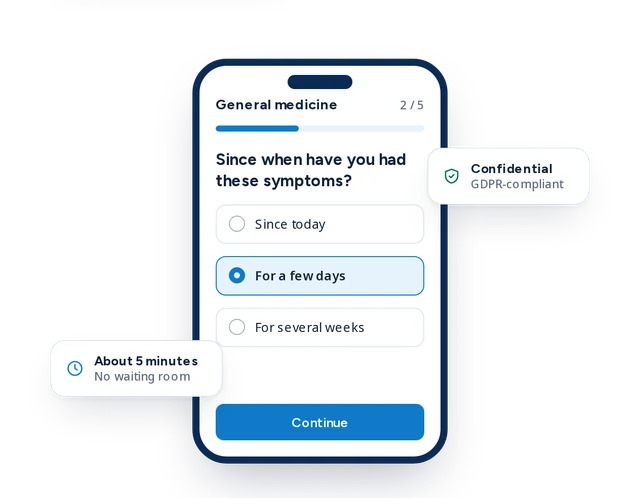
Complete the questionnaire

Brief details about your symptoms

STEP 02

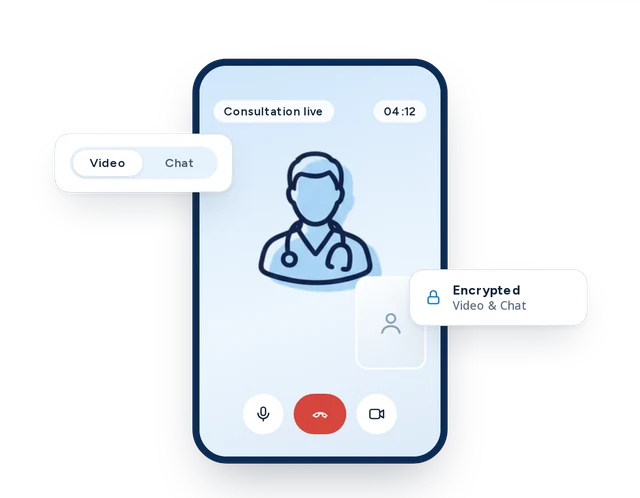
Doctor connects with you

Video consultation within minutes

STEP 03

Receive your documents

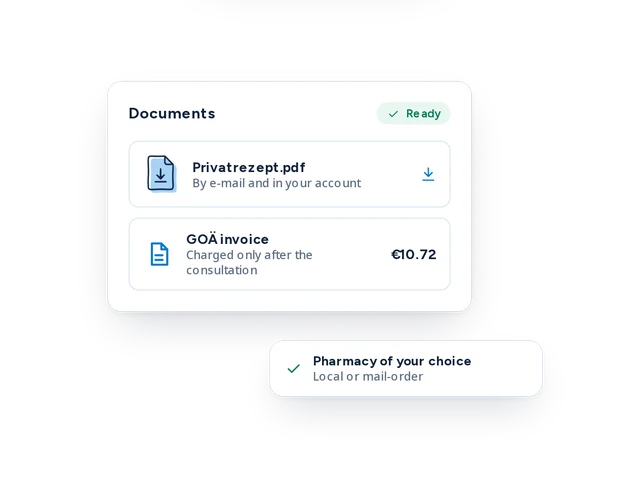
Prescription, sick note or referral, digitally

Estimated wait

~ min wait

Related treatments

More conditions we treat by video consultation.

AVAILABLE NOW

Video consultation — usually <15 min wait

Medical notice: Not a substitute for an in-person medical examination. The information on this page is intended for general guidance only. In an emergency, please call 112.

Frequently Asked Questions

Can I get a repeat prescription for my asthma inhaler via video consultation?

If your asthma is stable and you are already familiar with your inhaler therapy, the doctor can issue a repeat prescription after medical assessment in the video consultation. It helps if you have the name of your current inhaler and previous findings to hand. There is no guarantee of a prescription – the doctor decides in each individual case.

What does the video consultation for asthma cost, and will my insurance cover it?

Billing is as a private medical service under the German medical fee schedule (GOÄ). You receive a transparent invoice that you can submit to your private health insurance or Beihilfe for reimbursement; reimbursement depends on your tariff. If you are self-paying, you bear the costs yourself and see the price before booking.

When is a video consultation not suitable for asthma?

In an acute asthma attack with severe shortness of breath, bluish lips, or if your reliever medication is not working, call the emergency number 112 immediately. An in-person examination with lung function testing is also advisable if your symptoms have clearly worsened over several days, if you frequently wake at night due to breathlessness, or if the diagnosis is unclear. In these cases the online consultation does not replace a visit to a practice.
Which documents should I have ready for the video consultation?

If possible, have your current inhalers or their names, previous doctor's letters, lung function results and – if available – your peak-flow readings ready. This helps the doctor assess your treatment. Information on allergies and other medications is also helpful.

Can asthma be newly diagnosed online?

A first-time asthma diagnosis usually requires a physical examination and a lung function test, which are not possible online. In the video consultation, the doctor can assess your symptoms and recommend the next steps, such as seeing a specialist. In this situation the online consultation provides orientation, not a definitive diagnosis.